

PEP Medicine at Home in Dubai: Consultation Support
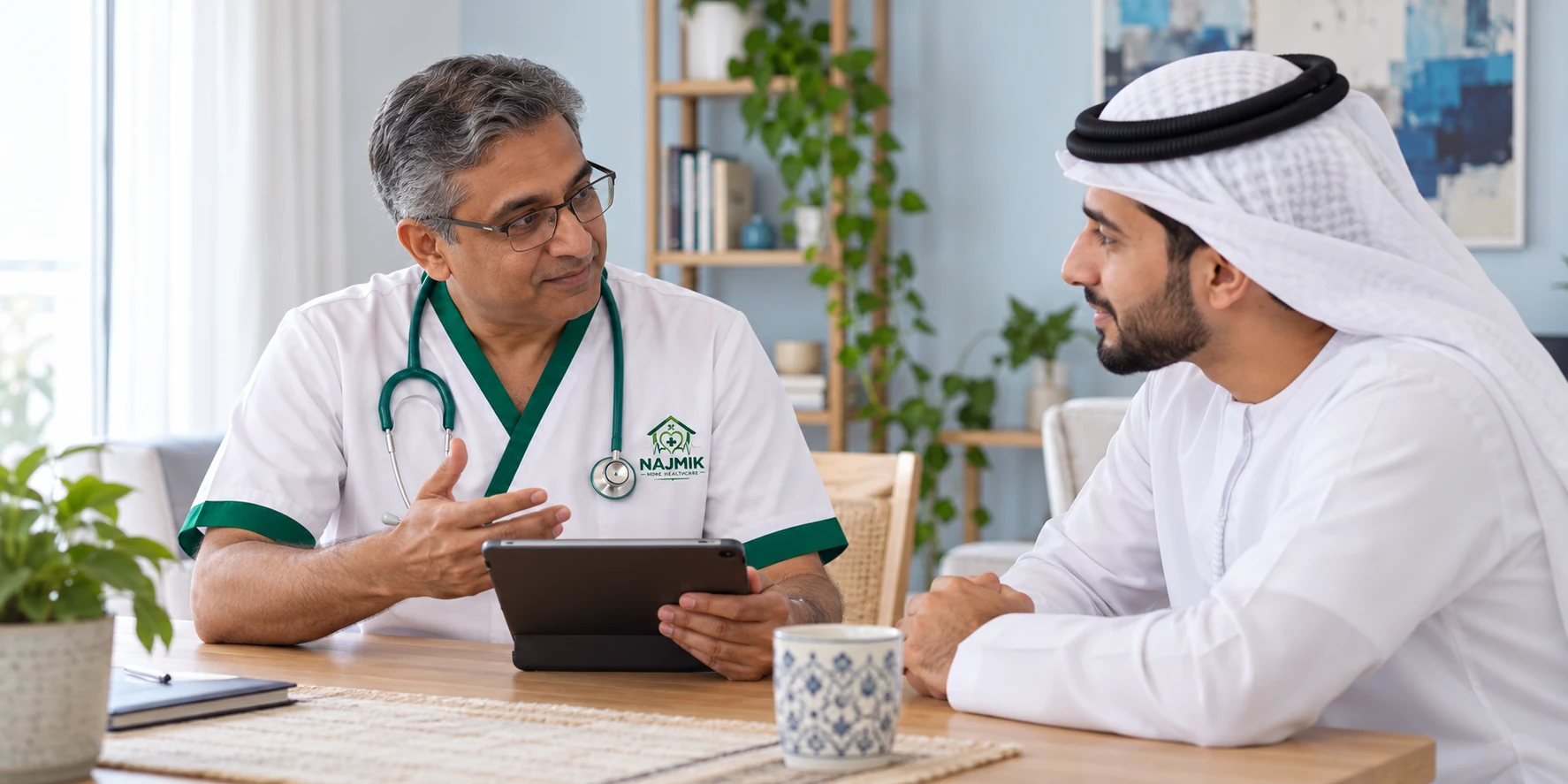
Najmik Home Healthcare provides PEP and PrEP support in Dubai through teleconsultation arrangements, doctor visits at home, hotel or office, appropriate testing and prescription-based medicine coordination through licensed pharmacies. Clinical assessment determines suitability and prescribing; appointments and medication arrangements are subject to availability.
Read 84 PEP & PrEP questions and answers ↓
Urgent PEP Enquiry ↗PrEP Consultation ↗
Estimated doctor home arrival: 20–25 minutes in eligible Dubai areas, subject to location, traffic, clinical suitability and availability. Teleconsultation can also be arranged. Medication delivery is coordinated separately after clinical assessment, prescription verification and stock confirmation; our team confirms its estimated timing before dispatch.
Understand your HIV prevention options
For related care in Dubai, explore Doctor on Call, confidential STD and STI testing, and home lab testing. A clinician can advise which services are appropriate; possible recent HIV exposure needs urgent assessment.
PEP — Post-Exposure Prophylaxis
PEP is a time-sensitive course of HIV medicines considered after a potential exposure, such as unprotected sex, condom failure or needle exposure. A clinician evaluates the circumstances and normally prescribes a 28-day course when indicated.
Start: as soon as possible and within 72 hours. Baseline tests and follow-up are required.
When seeking assessment:
- Tell the clinician when the possible exposure happened and what occurred.
- Share current medicines, allergies and relevant health conditions.
- Follow the clinician’s advice about tests, prescriptions and follow-up.
- Seek urgent medical care now; do not wait for an online reply.
PrEP — Pre-Exposure Prophylaxis
PrEP helps prevent HIV in people with ongoing exposure risk. A qualified, appropriately authorized clinician assesses HIV status, medical history, kidney function, hepatitis B and follow-up requirements before prescribing.
Planning: PrEP is not an emergency substitute for PEP after a recent exposure.
Where to Get PEP Medicine in Dubai
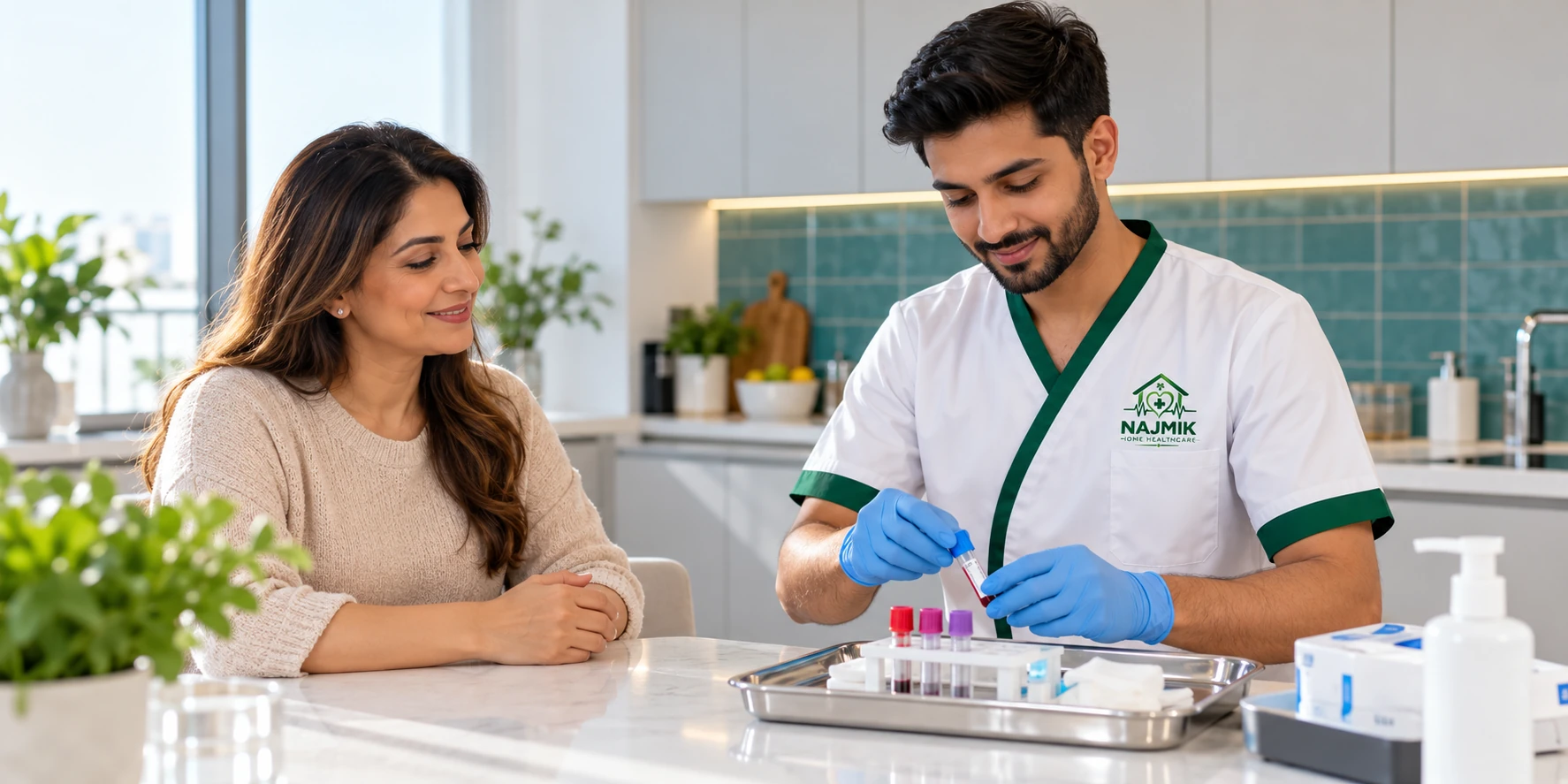
Contact Najmik Home Healthcare for consultation arrangements, appropriate testing and prescription-based medication delivery coordination. If you already have a prescription, our team can explain the verification requirements and check available delivery options for your location.
1. Contact our team
Share your Dubai location and whether you need urgent PEP assistance, a PrEP consultation or support with an existing prescription. For a possible exposure, tell the clinician when it happened.
2. Complete the clinical review
An appropriately licensed clinician determines suitability, necessary tests and prescribing requirements. Share current medicines, allergies and relevant health conditions.
3. Confirm prescription and stock
Your prescription and medication availability are checked through authorized providers. Our team confirms the available delivery arrangements and applicable charges before you confirm the booking.
4. Receive your delivery estimate
The 20–25-minute estimate applies to doctor home arrival, subject to location, traffic and availability. Medication delivery has a separate estimate, confirmed after prescription verification, stock checks and authorized pharmacy arrangements.
After delivery, take medication exactly as prescribed and complete the testing and reviews recommended by your clinician. For oral PrEP, assessment includes HIV testing, kidney function and other checks appropriate to your treatment plan.
Prescription-based medication support
How to prepare for a clinician-led consultation:
- Seek timely care: For a possible recent HIV exposure, obtain urgent medical assessment; PEP must begin within 72 hours when indicated.
- Share relevant details: Explain the exposure timing, medicines, allergies and health history privately to the clinician.
- Follow the care plan: Complete prescribed testing, medication and follow-up as directed. Availability and eligibility are assessed individually.
Najmik Home Healthcare helps coordinate PEP and PrEP medication services for patients with a valid prescription through authorized pharmacies or licensed medical-provider channels. Every request is subject to prescription verification, UAE regulations, clinical appropriateness and stock availability. Prescribing decisions belong to appropriately licensed clinicians.
01 · Clinical review
Prompt assessment or referral for exposure history, medical suitability and appropriate testing.
02 · Prescription verification
Coordination with authorized providers for valid prescriptions and available medicines.
03 · Follow-up support
Information on adherence, clinician-directed testing and further appointments.
Confidential testing and medical monitoring
The following table explains typical differences. Testing and medication decisions require an individualized clinical assessment.
| Topic | PEP | PrEP |
|---|---|---|
| When used | After a possible HIV exposure | Before potential HIV exposures |
| Timing | Start as soon as possible, within 72 hours when indicated | Plan with a clinician before exposure |
| Medical review | Urgent exposure assessment, HIV testing and prescription decision | HIV testing, suitability assessment and ongoing monitoring |
Baseline assessment
HIV testing, exposure assessment, medication history and any tests requested by your clinician.
Kidney and liver health
Kidney function assessment and other blood tests when indicated for a prescribed regimen.
Hepatitis and STI screening
Hepatitis B/C and other STI screening according to individual risk and medical guidance.
Follow-up testing
Clinician-directed repeat HIV tests and ongoing monitoring. Testing schedules depend on the medication and clinical situation.
Explore our STD & STI Testing and Doctor on Call services.
Why choose Najmik Home Healthcare?
Discreet enquiries
Respectful communication and privacy-conscious booking assistance.
Dubai-wide coordination
Home, hotel and office visit options subject to clinical and staff availability.
20–25 minute home-arrival estimate
Doctor home arrival is estimated for eligible Dubai locations, subject to traffic, clinical suitability and availability. Medication delivery timing is confirmed separately. Urgent medical assessment must not be delayed.
84 PEP & PrEP patient questions and answers
General educational guidance; your clinician determines individual care. For possible recent HIV exposure, seek urgent assessment immediately rather than waiting for a home visit or reply.
Questions in this guide
- Understanding HIV exposure
- Condom breakage, slipping and leakage
- Anal sex and same-sex contact
- Vaginal sex and oral sex
- Blood exposure and other situations
- PEP: starting treatment
- Taking PEP and follow-up
- PrEP and ongoing prevention
- Confidential care and booking
Understanding HIV exposure
1. What counts as a possible HIV exposure?
Potentially infectious fluids must reach a mucous membrane, damaged tissue or the bloodstream. A clinician assesses the circumstances.
2. Which sexual activities can transmit HIV?
Anal and vaginal intercourse can transmit HIV. Prevention use and the partner’s viral suppression change the assessment.
3. Can HIV spread through kissing, saliva, touching or sharing utensils?
Ordinary kissing, saliva, touching and shared utensils do not transmit HIV. Blood exposure requires a separate assessment.
4. What if my partner’s HIV status is unknown?
Unknown status does not mean your partner has HIV. Seek prompt assessment based on the activity and timing.
5. What if my partner has HIV and an undetectable viral load?
A person maintaining an undetectable viral load on effective treatment does not transmit HIV sexually. Confirm treatment history with the clinician.
6. Does having another STI affect HIV exposure risk?
Some STIs increase susceptibility. Discuss symptoms, testing and treatment with your clinician.
7. Can I tell whether I have HIV from symptoms?
No. Symptoms cannot confirm or exclude HIV; appropriately timed testing is necessary.
8. Can an immediate negative HIV test rule out a recent exposure?
No. A baseline negative test cannot exclude an exposure that just occurred. Follow-up testing is necessary.
Condom breakage, slipping and leakage
9. What should I do immediately if a condom breaks?
Stop intercourse and seek urgent exposure assessment. Do not douche or use disinfectants internally. Discuss pregnancy prevention if relevant.
10. Do I need PEP after a condom breaks during anal or vaginal sex?
Possibly. The clinician considers exposure details, timing, PrEP use and the partner’s HIV status and viral suppression.
11. What if the condom slips off during sex?
Treat possible unprotected contact as an exposure requiring timely assessment; explain when and how slipping occurred.
12. What if the condom remains inside after sex?
Seek help if you cannot remove it gently. Exposure assessment and pregnancy prevention may also be needed.
13. What if semen leaks from the condom?
Describe where the fluid contacted your body. Mucosal contact differs from contact with intact external skin.
14. What if I’m unsure whether the condom broke?
Explain your uncertainty promptly. A clinician can assess whether preventive treatment or other care is appropriate.
15. Is assessment needed if there was no ejaculation?
Yes, assessment may still be appropriate. Lack of ejaculation does not eliminate every possible sexual exposure.
16. Does withdrawal remove the risk of HIV?
No. Withdrawal is not reliable HIV prevention.
17. What if I notice condom damage only after sex?
Seek assessment immediately and report the time of intercourse. Do not wait for symptoms.
Anal sex and same-sex contact
18. Can HIV be transmitted through sex between two men?
Yes, depending on the activity and prevention used. Sexual orientation itself does not determine transmission.
19. What is the difference between receptive and insertive anal sex?
Receptive means receiving the penis; insertive means inserting it. Both roles can involve HIV exposure.
20. Do I need assessment after receptive anal sex without a condom?
Yes, seek urgent assessment after a possible exposure. Receptive anal intercourse has higher HIV transmission risk.
21. Do I need assessment after insertive anal sex without a condom?
Yes, exposure is possible for the insertive partner too. A clinician determines whether preventive treatment is indicated.
22. Does bleeding or a tear during anal sex affect exposure risk?
Injury can affect assessment. Significant bleeding or severe pain also needs urgent medical attention.
23. Can HIV be transmitted through sex between two women?
Transmission is rare but possible with infected blood or certain fluid exposures. Assessment depends on the activity.
24. Can shared sex toys transmit HIV?
Risk is generally very low; blood, fluid transfer and tissue injury affect assessment. Clean toys and change condoms between users.
25. Can fingering or mutual masturbation transmit HIV?
These activities ordinarily carry little to no HIV risk. Direct infected-blood contact with wounds warrants assessment.
Vaginal sex and oral sex
26. Do I need assessment after vaginal sex without a condom?
Seek prompt assessment after possible exposure; discuss HIV, other STIs and pregnancy prevention where relevant.
27. Can HIV be transmitted through oral sex?
Oral sex carries little to no HIV risk in most circumstances; exceptional blood-related circumstances need individualized assessment.
28. Does giving or receiving oral sex make a difference?
Yes, the exposure details differ. Describe the activity, fluid contact and any bleeding to the clinician.
29. What if semen enters my mouth or I swallow semen?
Oral exposure is generally low risk. Blood, injury and other circumstances guide whether further assessment is needed.
30. Do mouth ulcers or bleeding gums affect assessment?
Yes. Mention ulcers, bleeding and any blood exposure when describing the encounter.
31. Do I need emergency contraception after condom failure?
If pregnancy is possible, seek advice promptly. Some options work within five days; suitability and timing differ.
32. What other STIs should I discuss after sexual exposure?
Discuss gonorrhea, chlamydia, syphilis and hepatitis, with sampling sites chosen for the sexual activities involved.
Blood exposure and other situations
33. What should I do after a needlestick injury?
Wash with soap and water and seek immediate assessment. Workplace injuries should also be reported through occupational-health procedures.
34. What if blood enters my eye or mouth?
Rinse with water and seek urgent assessment. Explain the source, amount and timing.
35. What if blood touches an open wound or broken skin?
Wash gently and obtain prompt assessment; the wound and source determine further care.
36. What if blood touches intact skin?
Intact skin is an effective barrier. Wash the area; mention any cuts or skin disease if uncertain.
37. What should I do after sharing needles or injection equipment?
Seek urgent assessment for HIV and hepatitis. Avoid further sharing and discuss prevention support.
38. What should I do after sexual assault?
Go to a safe place and seek urgent, trauma-informed medical care for injuries, HIV prevention, STI care and pregnancy prevention.
39. Should I also be assessed for hepatitis B and hepatitis C?
Often yes. Hepatitis B vaccination or other prevention and hepatitis C testing depend on exposure and vaccination history.
PEP: starting treatment
40. What is PEP?
PEP is a prescribed course of medicines used after a potential HIV exposure to reduce the chance of infection.
41. Who may need PEP?
People with a recent substantial-risk exposure may qualify after individual clinical assessment.
42. How soon should I seek assessment after an exposure?
Immediately. When indicated, treatment starts as soon as possible, ideally within 24 hours and no later than 72 hours.
43. What if more than 72 hours have passed?
Treatment is generally not recommended beyond 72 hours. Still seek assessment for testing and prevention planning.
44. Should I wait for symptoms or my partner’s test results?
No. Do not delay urgent assessment; clinicians should not postpone indicated treatment while awaiting laboratory results.
45. Can I get PEP from a pharmacy?
A licensed pharmacy may dispense prescribed medication subject to local requirements and stock. Seek clinical assessment first.
46. Do I need a prescription for PEP?
This treatment requires clinician-led assessment and prescribing. Do not self-medicate with borrowed or leftover medicines.
47. Where can I obtain an urgent PEP assessment in Dubai?
Seek an emergency department or an appropriately licensed service able to assess and initiate treatment promptly.
48. What information will the doctor ask about the exposure?
Timing, activity, fluid contact, partner information, prevention used, medicines, allergies and relevant medical history.
49. What tests are needed before starting PEP?
Baseline HIV testing and relevant kidney, liver, hepatitis, STI and pregnancy checks are selected individually.
50. Which PEP medication is suitable for me?
The clinician selects a regimen based on medical history, interactions, pregnancy considerations and local availability.
51. How long does a course of PEP last?
A standard course lasts 28 days. Follow the exact prescription.
52. How effective is PEP?
Treatment substantially reduces risk when started promptly and taken correctly, but protection is not guaranteed.
53. Can I take PEP again after another exposure?
A clinician may prescribe another course when indicated. Repeated exposures warrant discussion of PrEP.
Taking PEP and follow-up
54. What side effects can PEP cause?
Nausea, diarrhea, headache or tiredness can occur. Seek urgent help for severe symptoms or suspected allergic reactions.
55. What should I do if I miss a dose?
Contact your pharmacist or prescriber promptly for instructions specific to your medication; do not double up without advice.
56. What if I vomit after taking a dose?
Contact the pharmacist or prescriber with the medication name and time since dosing. Replacement-dose advice varies.
57. Can PEP interact with other medicines or supplements?
Yes. Share all medicines, supplements and antacids with your prescriber or pharmacist.
58. Can I drink alcohol while taking PEP?
Ask your clinician about your regimen and health. Alcohol can worsen side effects or interfere with adherence.
59. Can PEP be considered during pregnancy or breastfeeding?
Yes, urgent assessment is still appropriate. Medication and infant-feeding advice require individualized specialist guidance.
60. Can I stop PEP if my partner tests negative?
Only on your clinician’s advice; the test type, timing and possible recent infection must be considered.
61. What if I have another exposure while taking PEP?
Contact the prescriber promptly. Do not independently extend or change treatment.
62. Can I have sex while taking PEP?
Use condoms or avoid sex during follow-up, following your clinician’s advice.
63. How can I protect my partner during follow-up?
Use condoms, avoid sharing injection equipment and follow the testing plan. Discuss ongoing prevention together.
64. When should I have follow-up HIV and STI tests?
CDC guidance includes HIV follow-up at 4–6 and 12 weeks after exposure; your clinician individualizes additional testing.
65. Can PEP affect the timing or interpretation of HIV tests?
Yes. Antiretroviral use can affect detection, so tell the clinician about PEP and complete the recommended follow-up.
PrEP and ongoing prevention
66. What is PrEP?
PrEP is prescribed HIV-prevention medication for people without HIV, used before potential exposure.
67. What is the difference between PEP and PrEP?
PEP addresses a recent possible exposure; PrEP provides planned ongoing prevention.
68. Who should discuss PrEP with a clinician?
Anyone seeking additional HIV prevention can discuss PrEP, particularly people expecting repeated exposures.
69. What tests are needed before starting PrEP?
HIV testing is essential; kidney, hepatitis and STI checks depend on the proposed medication and circumstances.
70. How long does PrEP take to provide protection?
Daily oral TDF/FTC reaches protective levels around seven days for receptive anal sex and up to 21 days for receptive vaginal sex; other situations differ.
71. What if I miss a PrEP dose?
Follow medication-specific advice and contact your clinician after possible exposure; protection depends on adherence and regimen.
72. Do I need PEP if I’m already taking PrEP?
Usually not when PrEP is taken correctly; missed doses or recent initiation can change the assessment.
73. Does PrEP protect against other STIs or pregnancy?
No. Other prevention and contraception may still be needed.
74. What monitoring is needed while taking PrEP?
Regular HIV testing, adherence review and regimen-specific kidney and STI monitoring are required.
75. Can I transition from PEP to PrEP?
Yes, with clinician-directed HIV testing and a transition plan; do not create your own medication schedule.
76. How do I safely stop or restart PrEP?
Consult your prescriber before changing treatment, especially with hepatitis B or a recent exposure.
Confidential care and booking
77. Will my consultation and test results remain confidential?
Ask about records, communication and applicable reporting requirements. Privacy is handled within professional and legal obligations; absolute anonymity cannot be promised.
78. What identification or documents are required?
Confirm requirements with the team before booking. Bring identification, relevant results, medicine details and any existing prescription.
79. Can I arrange a home consultation in Dubai?
Contact the team with your location to confirm coverage and clinical suitability. Urgent exposure care must not be delayed.
80. Are home sample collection and medication delivery available?
The team can check collection options and prescription-based pharmacy coordination, subject to clinical requirements and availability.
81. How is appointment or delivery availability confirmed?
The team confirms staffing, location, prescription requirements, stock, charges and estimated timing before you confirm.
82. How much do consultation, testing and medication cost?
Request an itemized quotation from the team; prices vary by assessment, tests, medication and delivery arrangements.
83. Is follow-up included in the quoted price?
Confirm this explicitly before booking; ask which reviews, tests and medication charges are included.
84. How do I book with Najmik Home Healthcare?
Call or WhatsApp +971 56 898 1906. For time-sensitive exposure, seek urgent medical assessment rather than waiting for a reply.

Clinical references
For independent information about HIV prevention, consult the World Health Organization guidelines for HIV post-exposure prophylaxis and the CDC clinical guidance for PrEP. These resources explain general clinical principles; your treating clinician determines your individual care plan.
PEP medicine and confidential HIV testing: Dubai search questions
PEP medicine near me
Looking for PEP medicine near me in Dubai? PEP medication is currently in stock and available through NAJMIK HOME HEALTHCARE, subject to a doctor’s assessment, a valid prescription and confirmation at booking. Patients can enquire about a 5-minute teleconsultation or a 20–25-minute doctor home visit option, subject to location, availability and clinical suitability. Following a possible HIV exposure, seek urgent assessment at a facility able to initiate PEP; do not wait for a reply, home visit or delivery. PEP must start as soon as possible and within 72 hours when indicated.
PEP pills where to buy?
Wondering where to buy PEP pills in Dubai? PEP medication is currently in stock with NAJMIK HOME HEALTHCARE. Contact our team for confidential doctor consultation, prescription assessment and medication arrangements through authorized pharmacy channels in accordance with UAE requirements. Medication access requires clinical suitability and a valid prescription; stock and delivery should be reconfirmed at booking. If HIV exposure may have occurred, seek urgent assessment without delay.
PEP medicine in UAE
PEP medicine in the UAE is currently in stock through NAJMIK HOME HEALTHCARE in Dubai, as confirmed by our team. Contact us for urgent doctor assessment and prescription-based medication arrangements through authorized pharmacy channels. Dispensing requires clinical suitability and a valid prescription; reconfirm stock when booking. PEP should begin as soon as possible and within 72 hours of a possible HIV exposure.
PEP Dubai: when should treatment begin?
For urgent PEP Dubai enquiries, NAJMIK HOME HEALTHCARE offers confidential doctor consultation and access to currently stocked PEP medication, subject to prescription and clinical suitability. A 5-minute teleconsultation option or a 20–25-minute doctor home visit option may be available depending on location and staffing. After a possible exposure, seek immediate care at a facility that can start PEP if faster; treatment must begin within 72 hours when indicated and generally continues for 28 days.
Confidential HIV test Dubai
Confidential HIV testing in Dubai may involve clinician-selected laboratory screening and follow-up. A baseline negative test cannot exclude a very recent exposure, and confidentiality is subject to applicable UAE requirements.
Private HIV test at home Dubai
NAJMIK HOME HEALTHCARE accepts enquiries for private HIV test at home Dubai sample collection, subject to test suitability, location and availability. Home testing must not delay urgent PEP assessment.
Confidential support across Dubai
Contact Najmik Home Healthcare for available consultations, home testing and valid-prescription medication coordination. For a possible recent HIV exposure, seek urgent medical care first.
WhatsApp / Call: +971 56 898 1906 · Dubai, UAE
Care At Your Doorstep.